Okinawan Roots: Oral History of the Rev. Jikai Yamasato
By the time the first Okinawan immigrants (our ancestors) came to Hawaii, there were already an estimated 60,000 immigrants from other prefectures in Japan in Hawaii.
Coming to Hawaii By 1899, Kyuzo Toyama began to see Hawaii as a better prospect for future emigration of the Okinawans than Formosa. At that time Hawaii was still hardly known to them in spite of the fact that… emigration from Japan to Hawaii from the southwestern prefectures of Japan...
Life on the Plantation for the First Arrivals They were all sent to Ewa Plantation. Soon, these men found life on the plantation extremely hard, in spite of their youthful vigor. Long, continuous hours of work – 10 hours a day-except for a 30 minute break for lunch. (Though the...
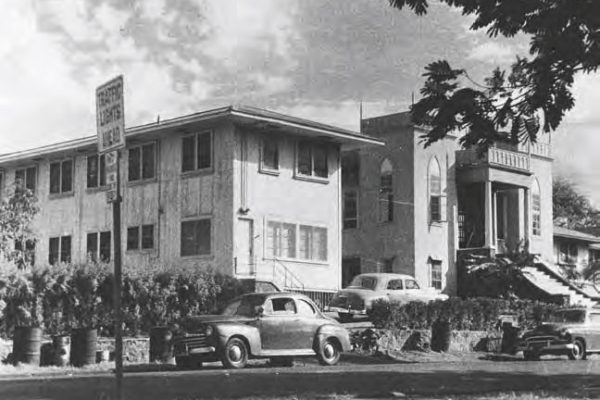
The Start of Jikoen Hongwanji In response to the aspiration of the Reverend Chiro Yosemori, missionary with the Hawaii Hongwanji Mission, the Jikoen Temple was established on Houghtailing Street in Honolulu in September 1938 with assistance from Okinawans and others of the same faith. The Hongwanji was so moved by...
Pigs from the Sea: Assisting the People of Okinawa After WWII In June 1947, the Okinawa Kyusai Koseikai (United Okinawa Assistance Association of Hawaii) was formed. They collected $47,196 with which 500 sows and 50 boars were purchased from the mainland. Seven members of the group, Yoshio Yamashiro, Gyukichi Nakama,...
Okinawan Culture Hawaiian Style Okinawan culture, a Hawaiianized version of the native original, is healthy and flourishing in Hawaii today. That is no small feat for an ethnic sub-group that constitutes perhaps 10 percent of Japanese Americans in Hawaii and is, for the most part, indistinguishable in appearance, language, culture...
Pieper Toyama led Bon dancers in a moment of silence just before the last dance of the 2018 Jikoen Bon Dance. The post contains a video and a transcript of Pieper's words.
Due to the outbreak of World War II, all temples were closed except Jikoen. We lived some distance from Jikoen and Rev. Ernest Hunt would pick up my two sisters and me and a few others, and we headed for Jikoen.